Team lead · Cultural experience concept
Stone Houses: An Immersive Storytelling and Community Co-creation Proposal
An adaptive-reuse proposal combining a story-based game, local memory, community participation and an operating model.
01
Overview
Context and purpose
An academic adaptive-reuse proposal for Stone Houses in Kowloon City, combining immersive historical storytelling with community co-creation spaces, resident employment and micro-enterprise opportunities, and a possible operating model.
My contribution
What I was responsible for
- 01
Originated the overall direction of linking conservation and continued use through light intervention, historical storytelling, and community co-creation.
- 02
Organised site background, heritage value, business model, spatial use, social mission, financial viability, partnerships, SWOT, and conclusion into one coherent proposal.
- 03
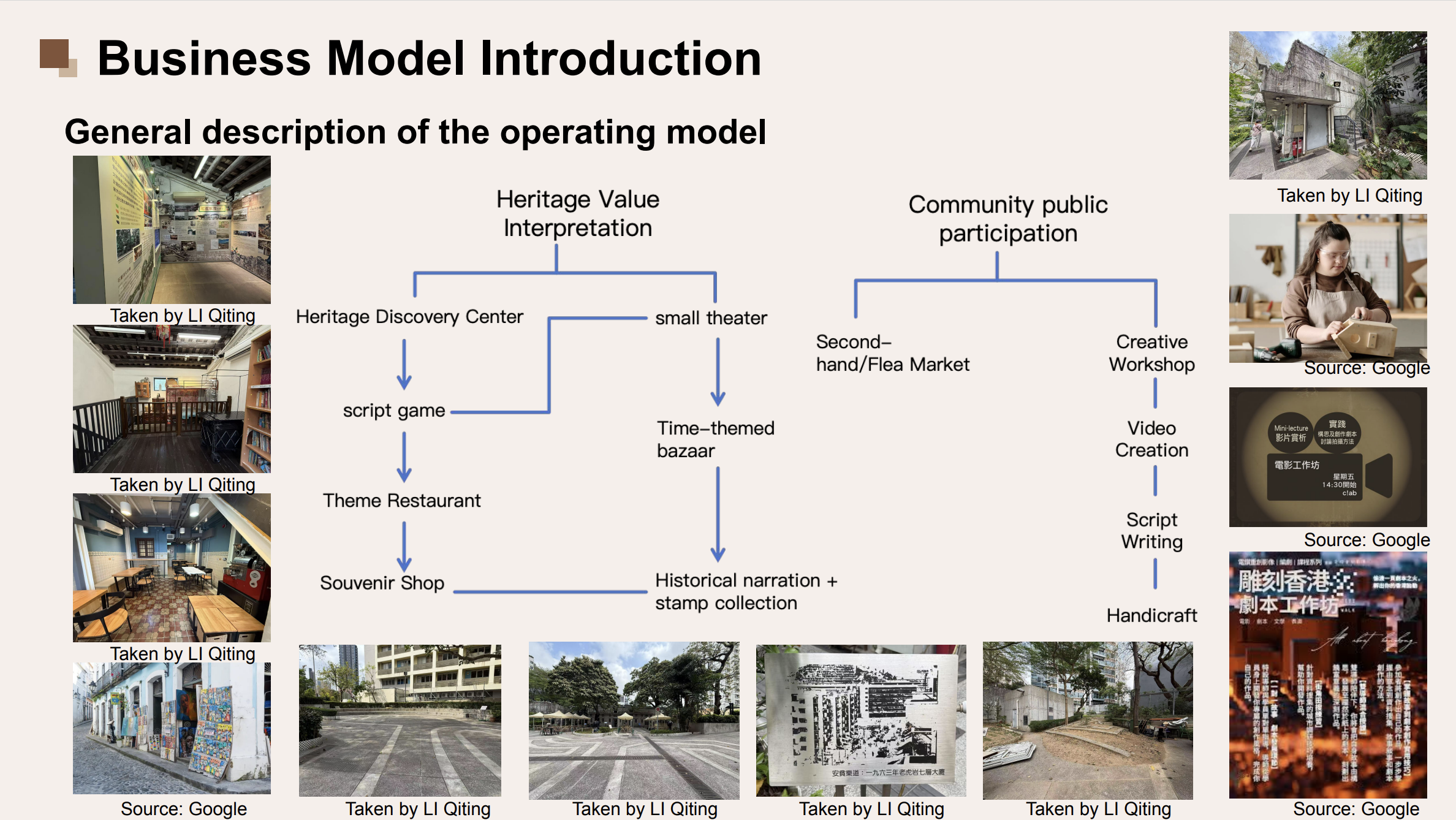
Led the programme connecting an indoor immersive storytelling venue, an outdoor co-creation market and small theatre, creative workshops, community activity, and garden use.
- 04
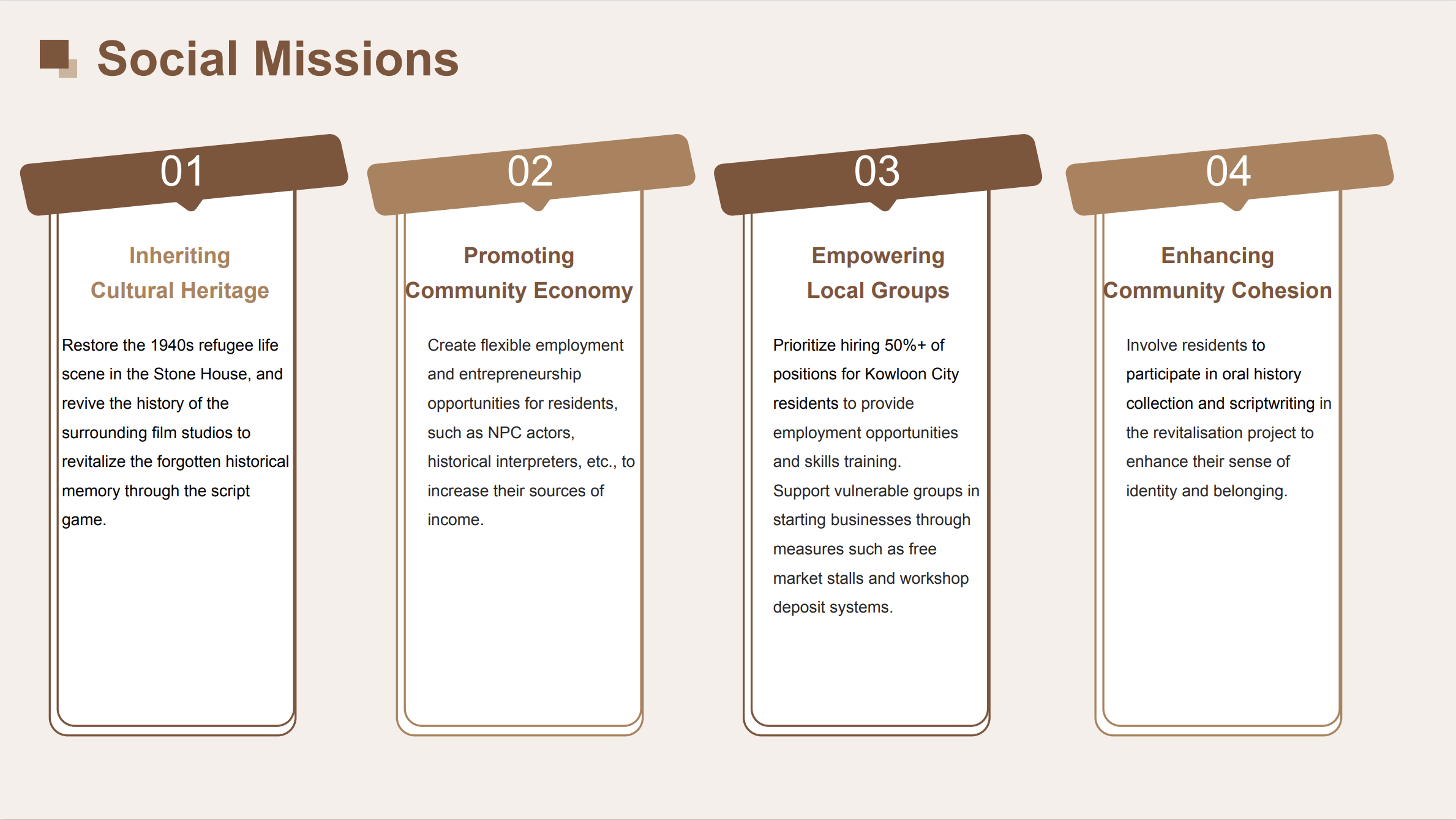
Produced the social strategy around cultural transmission, the community economy, local participation, and social cohesion.
02
Process & evidence
Site Challenge: Conserving More Than Stone Walls
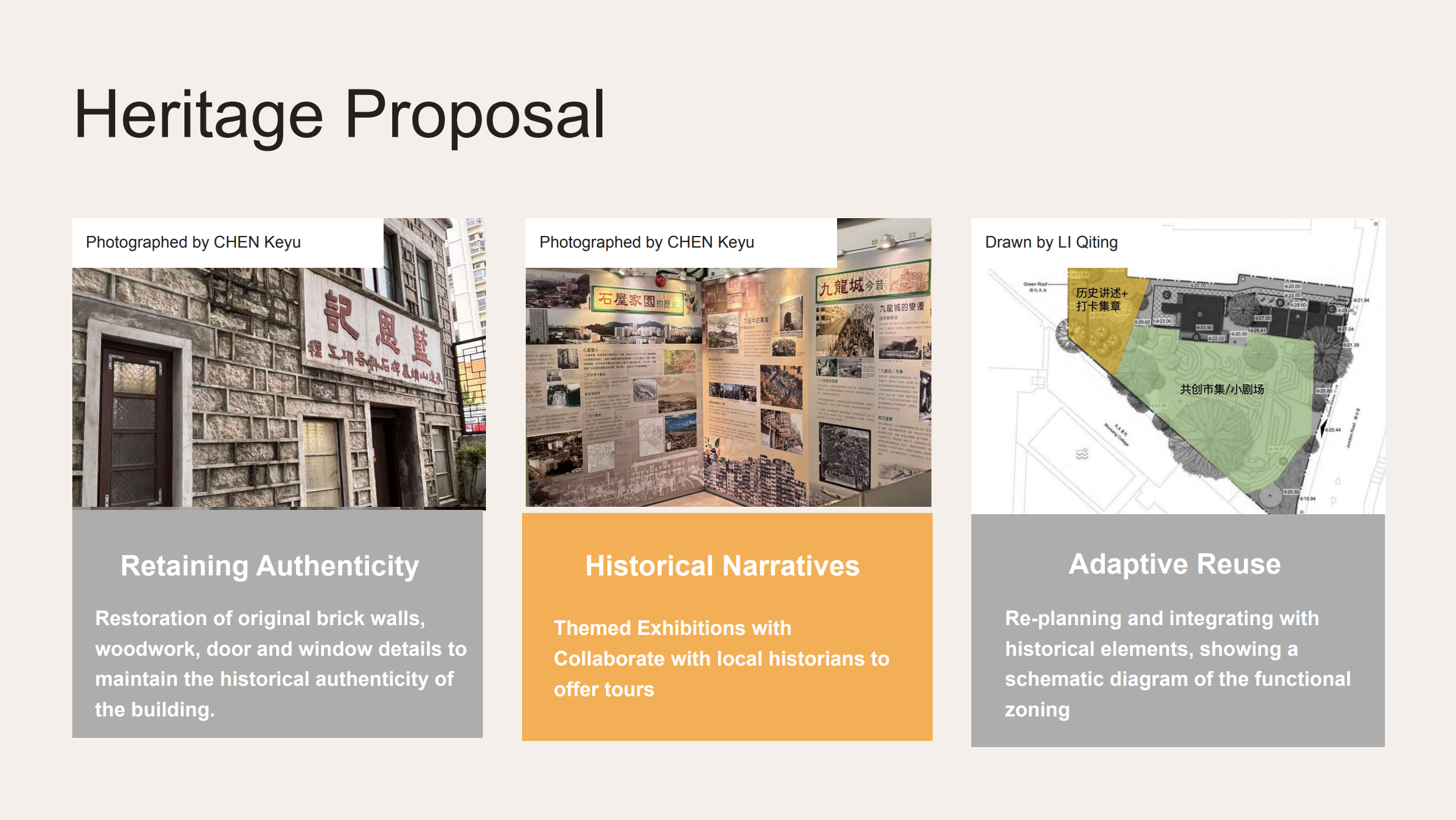
The team material describes Stone Houses as the remaining Chinese-style stone tenement group in Hau Wong Temple New Village, carrying layered memories of post-war resettlement, working-class residential and industrial life, and the surrounding film industry. Granite load-bearing walls, timber roof structures, tiled roofs, timber floors, doors, windows, stairs, and old cooking spaces provide tangible evidence of this history. Long-term conservation, however, cannot depend on fabric repair alone. The site also needs a use compatible with its significance and capable of attracting continued activity. A heavily commercial model could reduce the community to scenery, while a static exhibition might struggle to generate repeat visits and operating income. I therefore reframed the challenge around three connected aims: conserve the building and its narratives, give residents roles in content and daily use, and develop experiences and services that could contribute to maintenance.
03
Process & evidence
My Role: From Core Idea to Overall Structure
I originated the overall concept and helped turn it into a proposal structure that the team could develop and present. I established light intervention, dynamic storytelling, and community co-creation as the central direction, organised the relationships among background research, business model, spatial use, social mission, financial viability, partnerships, and risk, and led the spatial programme.
04
Process & evidence
Key Decision: Using Storytelling to Connect Indoor and Outdoor Space
The proposal did not treat Stone Houses as a single-purpose exhibition venue. Instead, it distributed historical content across a set of spaces designed for repeated use. Indoors, real architectural details and historical events became the basis for AR clues, directional sound, and room-based tasks that would introduce the building and its local narratives through exploration. The garden could operate as a themed market during the day and a small theatre at night, while also supporting resident exchange events, student flea markets, historical photographs, and guided interpretation. Creative workshops were proposed for model-making, photography, and script development, with low-barrier time and space reserved for community and school use. This programme expanded a heritage visit into viewing, participation, creation, selling, and exchange.
05
Process & evidence
Social Mission: Connecting Heritage Content with Community Benefit
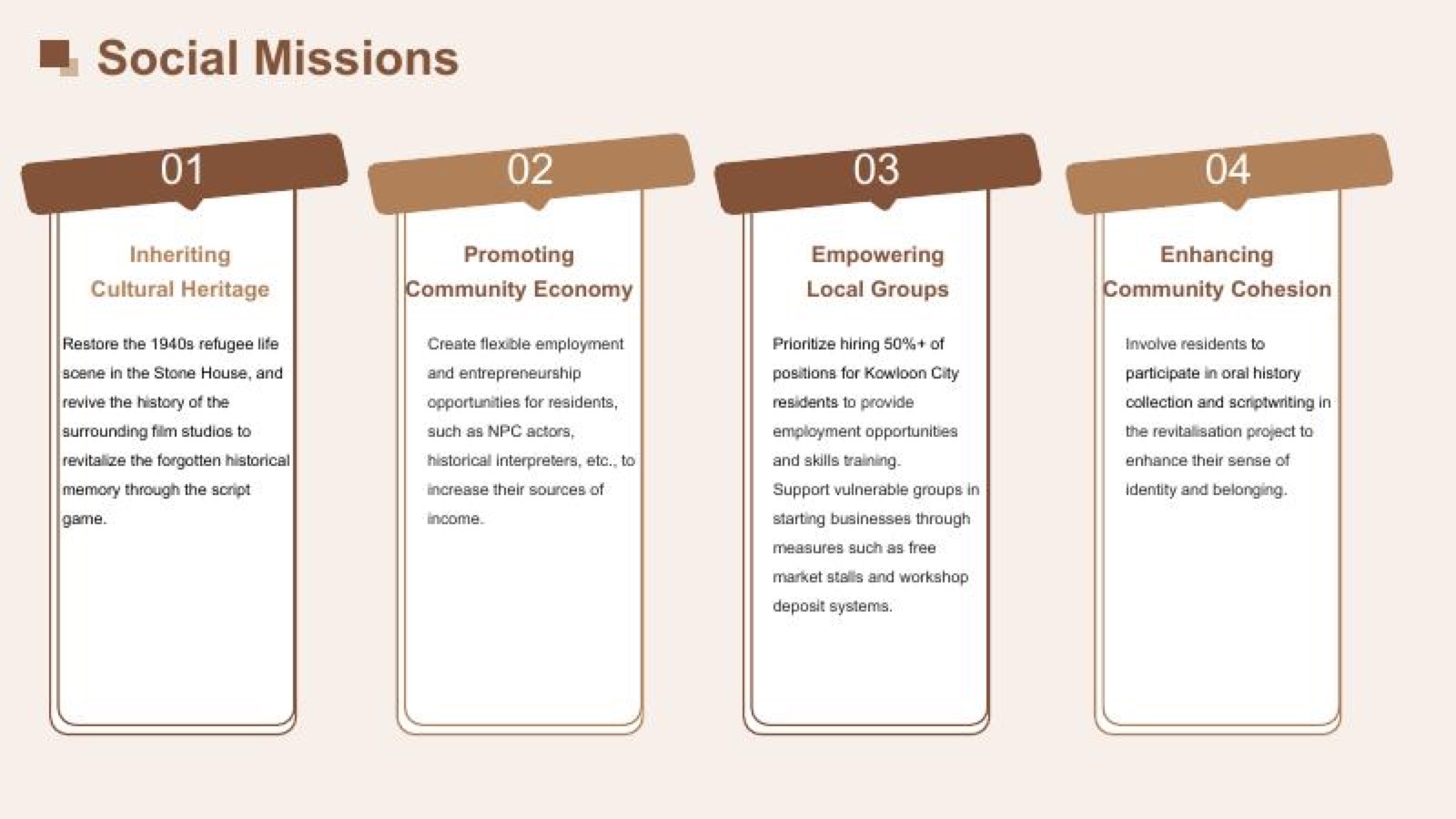
I organised the social strategy around four missions. First, the proposal would use memories of post-war housing, resettlement, and the surrounding film industry as material for scripts, interpretation, and workshops. Second, NPC performance, guiding, venue services, and market activity could create flexible work and micro-enterprise opportunities for residents. Third, priority access for Kowloon City residents, together with free or low-cost stalls and workshop arrangements, aimed to lower barriers for lower-income households, retirees, and people with caring responsibilities. Fourth, residents would contribute oral histories, scripts, product review, and event planning so that local knowledge could shape the project’s content rather than simply appear in an exhibition. Proposed outputs included *The Chronicles of Stone Houses*, an annual Stone Houses Cultural Festival, free tours, history workshops, and a script competition.
06
Process & evidence
Participation Model: From Audience to Content and Operating Roles
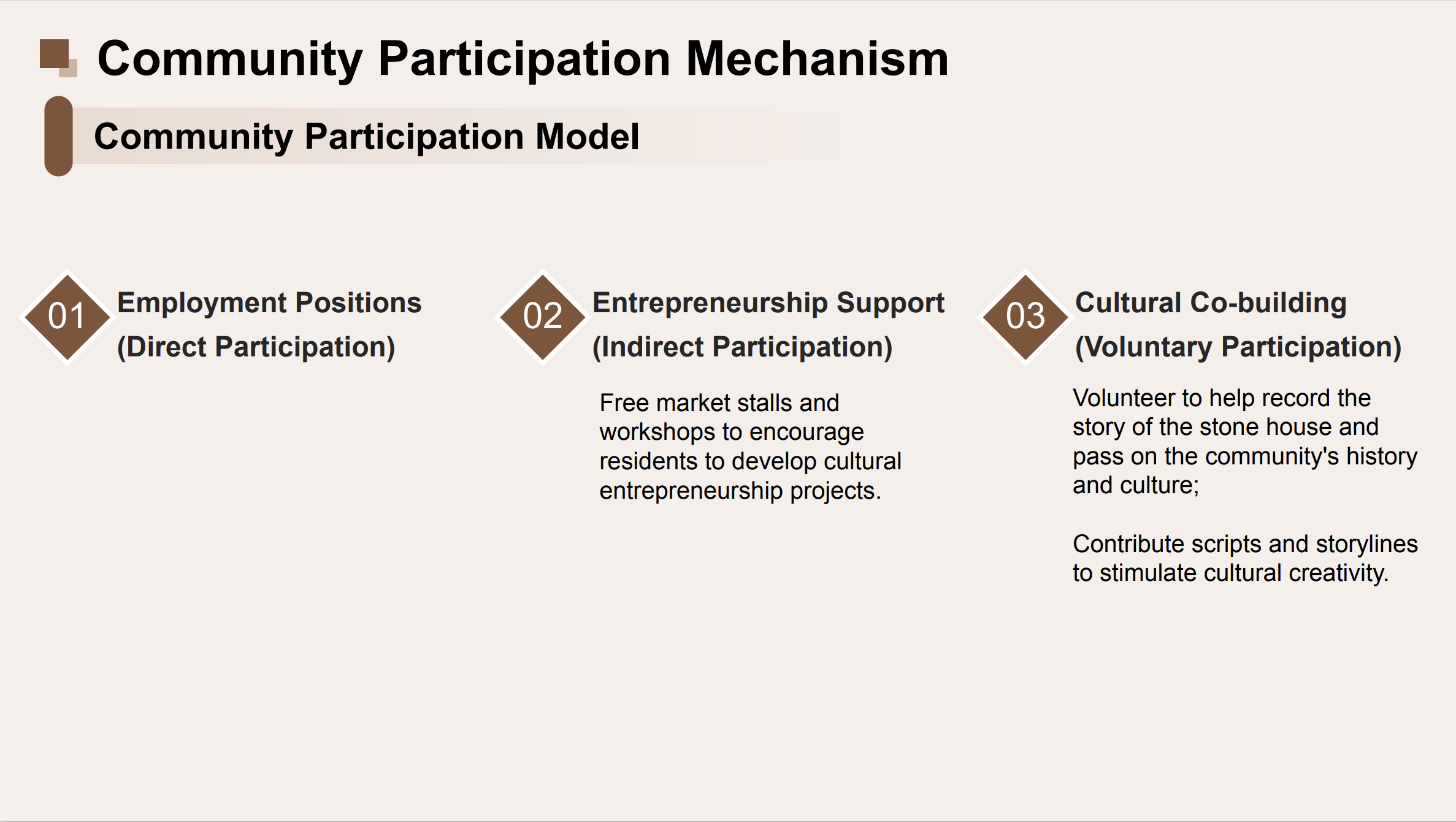
The social section organised participation at three levels. Direct participation connected full-time venue roles, part-time NPC work, and guiding to daily operations. Indirect participation used free market stalls and workshop access to support resident-made products, cultural enterprises, or small activities. Voluntary participation centred on oral-history recording and collaborative development of scripts and subplots. Different users also received different forms of access: general visitors would purchase the immersive experience; Kowloon City residents would receive priority for roles, stalls, and workshops; and students and tourists could join free tours, history workshops, and script activities. The partnership map then assigned possible roles to public and statutory bodies, community networks, a specialist operator, schools, and cultural institutions.
07
Process & evidence
Proposed Measures: Turning Ambition into Questions That Can Be Tested
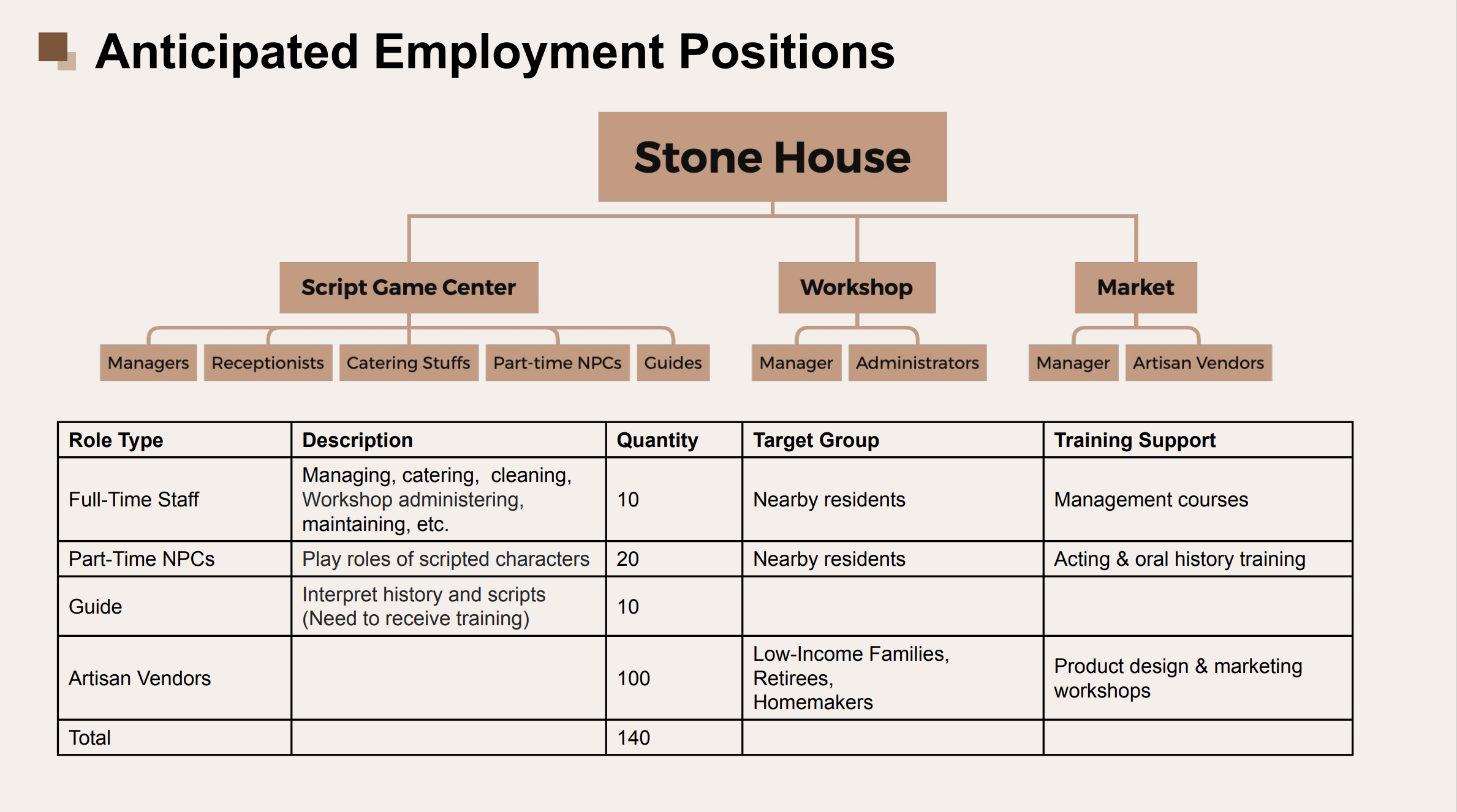
I used numbers in the social section to make the proposal more concrete, but they require careful interpretation. The role schedule proposed ten full-time staff, twenty part-time NPCs, and ten guides, for forty direct operating roles. It separately proposed opportunities for one hundred artisan vendors or family businesses and training for more than one hundred people each year. Other targets included prioritising more than half of roles for Kowloon City residents, establishing twenty market stalls, attracting 5,000 annual visitors, and generating household income and local commercial growth.
Outcome & reflection
Why this project matters
The project shows my ability to organise heritage significance, spatial use, visitor experience, community roles, and operating logic as one system.